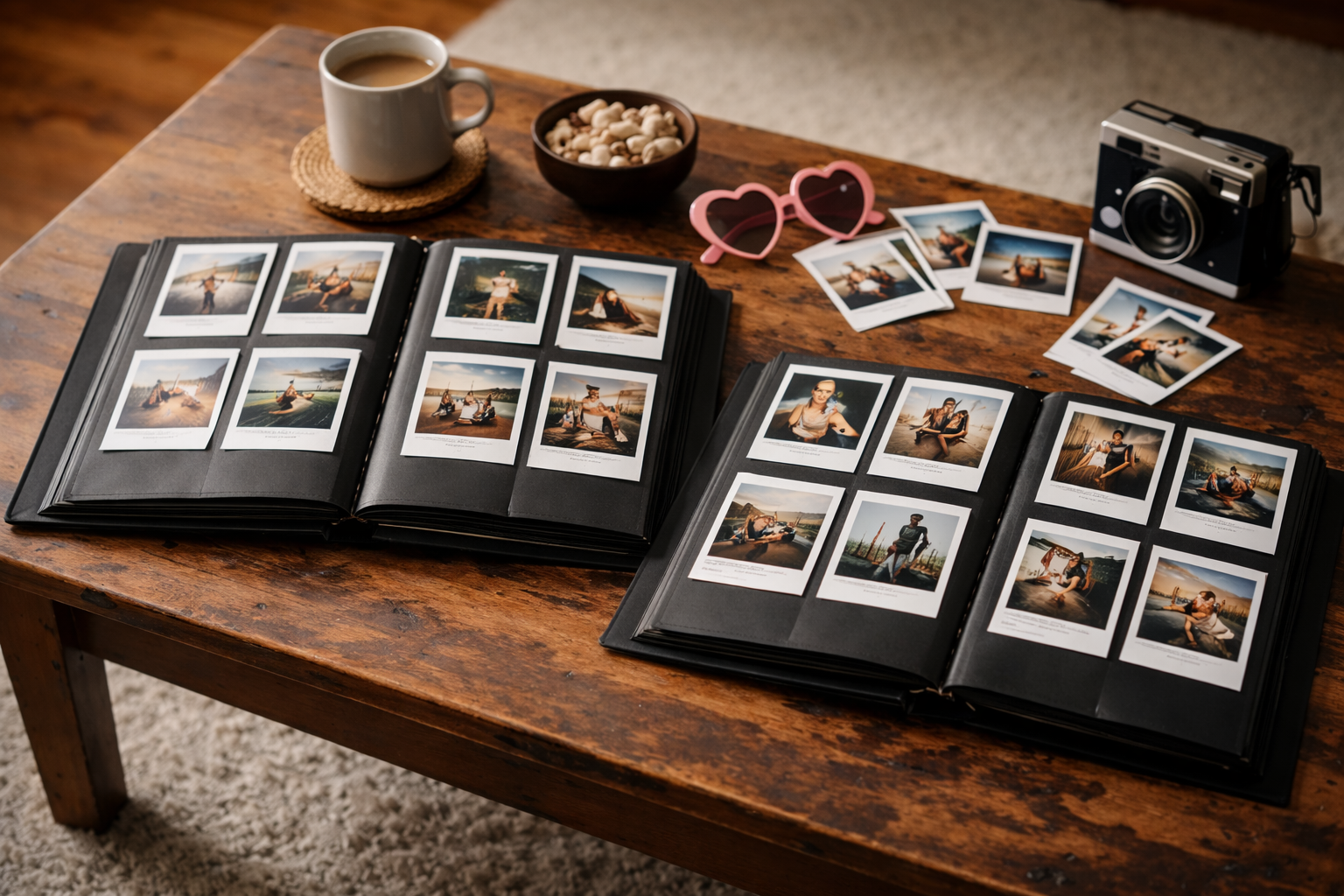
How to store Instant film correctly

1. Let Your Photos Fully Develop First
Before storing instant photos, make sure they are fully developed.
Most instant film takes:
10–15 minutes for Fujifilm Instax
15–30 minutes for Polaroid
During development:
Keep the photo face down or shaded
Avoid bending or shaking the print
Keep it away from extreme heat or cold
Once the photo is completely developed, it’s ready for long-term storage.
2. Keep Them Away From Light
Light is one of the biggest causes of fading in photographs.
For long-term preservation:
Store photos in albums
Use photo storage boxes
Keep them in drawers or cabinets
If you display instant photos on a wall, try to keep them out of direct sunlight, which can gradually fade colors over time.
3. Store in a Cool, Dry Environment
Temperature and humidity play a huge role in photo preservation.
Ideal storage conditions:
Temperature: 60–75°F (15–24°C)
Humidity: 30–50%
Avoid storing instant photos in:
Attics
Garages
Basements
Cars
Extreme heat can cause the chemical layers inside instant film to deteriorate faster.
4. Use Acid-Free Materials
Many cheap photo albums and storage materials contain acids that slowly damage photographs.
Look for:
Acid-free photo albums
Archival photo sleeves
Museum-quality storage boxes
These materials help prevent yellowing, sticking, and chemical breakdown over time.
5. Avoid Stacking Too Tightly
Instant photos have a thicker structure than traditional prints. When stacked tightly, they can:
Stick together
Warp
Scratch
If storing them in a box:
Keep stacks small
Separate groups with archival paper
Avoid placing heavy items on top
6. Handle With Clean Hands
The surface of instant film is sensitive.
Always:
Handle photos by the edges
Avoid touching the front image surface
Keep hands clean and dry
Oils from your fingers can leave marks that become permanent over time.
7. Consider Scanning Your Photos
Even when stored perfectly, physical photos can still be damaged by accidents.
A good backup plan is to:
Scan your instant photos
Store digital copies in the cloud
This preserves the memory even if the physical print is ever lost or damage.
Instant photos are meant to be shared, passed around, and treasured. With a little care — cool storage, minimal light exposure, and archival materials — your instant film photographs can stay vibrant for decades.
Part of the beauty of instant photography is that each photo becomes a tiny time capsule. Treat them well, and those moments will stay alive far longer than the moment they captured.